$3.14
Add to Cart
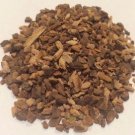
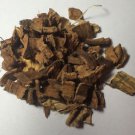
1 oz. Burdock Root (Arctium lappa) Organic & Kosher USA
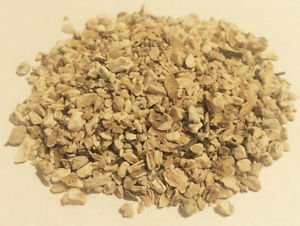


COMMON NAMEStandardized:burdockOther: great burdock, gobo, goboshiBOTANICAL NAMEArctiumlappaL.1Plant Family:AsteraceaeOVERVIEWBurdockhas been an important botanical in Western folk herbalism and traditionalChinese medicine for thousands of years, primarily valued for its cleansing andskin smoothing properties. The entire plant is edible and is a popularvegetable in Asia, particularly in Japan. More recently, burdock has been aningredient in hair tonics and in cosmetics for mature skin.4,5BOTANYAbiennal member of theAsteraceacefamily, with bright pink-redto purple thistle-like flowers on long stalks, and oblong to cordate, hugehairy leaves3,6that is native to Europe and Asia, and nownaturalized in North America and Austrailia.1This plant cangrow to a very robust height, reaching up to 9 feet,6and itsaromatic "carrot-like"7taproot can grow as much as 3feet deep into the ground (making them difficult to harvest).8Itis naturalized and abundant in northern U.S and Europe and is considered a weedin such areas.Thegeneric namearctiumis derived from the Greek word for bearorarktosand the species name,lappa, is from theLatin wordlapparewhich means "to seize." The fruit(bur) looks rough and hairy resembling a big, fuzzy bear and will grab on toanything in the vicinity in order to spread its seed, hence the name.8,9Itscommon name is derived from the French wordbourrereferringto a tangle of wool (often entangled with burs) and the German "dock"referring to large leaves.8Various species, such asA.minusorA. tomentosum, may be used interchangeably.10However,burdock is often confused with cocklebur orXanthium spp.thathas entirely different properties.7CULTIVATION AND HARVESTINGCultivatedin China, Japan, Vietnam, Indonesia, Philippines, New Zealand, the UnitedStates, Canada and in various countries in Europe.1Seedsare picked in the fall and can be loosened from the chaff with a rolling pin.Harvesting the roots is no easy task yet can be done in the fall of the firstyear or spring of the second, preferably the former. According to the lateherbalist Michael Moore "harvesting full flowered plants in the fall canbe as much work as digging up a small tree"7HISTORY AND FOLKLOREBurdockis an all-purpose herbal that has been used continually for myriad purposes thelast few thousand years in Asia and Europe, and more recently in North America.It is a food plant called gobo in Japanese and is a much consumed vegetable inJapan. The root may be eaten fresh or cooked and the young leaves can be cookedlike any other vegetable.9The stalks have a taste somewhatlike asparagus and can be eaten raw in a salad, boiled, or candied with sugar.8Intraditional Chinese medicine, burdock fruit has been used continually forthousands of years. It is known to balance internal heat, is specificallyhelpful for supporting skin health, and is associated with lung and stomachmeridians. It is considered energetically cold and having a slipperyconsistency that soothes mucus membranes. The root is also commonly cooked inorder to change its energetic properties and specifically to make it easier todigest.2In European folk medicine, an infusion or decoction of theseeds was employed as a diuretic. It was helpful in enhancing health throughsupporting digestion, and as topical poultice.-Culpepperin his Complete Herbal, written in 1653, says the following about Burdock:Itis so well known, even by the little boys, who pull off the burs to throw andstick upon each other, that I shall spare to write any description of it……TheBurdock leaves are cooling and moderately drying. The leaves applied to theplaces troubled with the shrinking of the sinews or arteries, gives much ease.The juice of the leaves, or rather the roots themselves, given to drink withold wine, doth wonderfully help the biting of any serpents.11Further,Culpepper, an avid astrologer in addition to being an herbalist, consideredburdock to be a feminine plant, ruled by the planet Venus and took this intoconsideration when preparing his burdock elixirs.11Traditionallythe root was thought to carry magical power, particularly powers of protectionand healing. It was believed that wearing a necklace that is made from theroot, gathered during the waning moon, would protect the wearer from evil andnegativity.12In the Native American healing tradition, theplant was used by the Malecite, Micmac, Ojibwa, and Menominee for skin health.Further, the roots were dried by the Iroquois over a fire and stored for foodfor the following year.13They also utilized the relatedA.minusin medicinal baths.Accordingto the William Cook, author of the Physio-medical Dispensatory in 1869, burdock"enters into a sort of family beer along with such agents as yellow dock,spikenard, elder flowers, and ginger" making a beneficial spring beverage.Herbalist Matthew Becker states that burdock is a "potent yet safelymphatic decongestant.” Also, that as a subtle alterative it works best overtime and demonstrates restorative properties due, in part, to its bitter toniceffects on the digestive system. It also contains inulin which feeds thehealthy bacteria in the colon.14Burdockis considered by many herbalists to be the best known medicinal for skinconditions (Hoffman, Moore). This herb is highly effective, gentle, andmultipurpose. It promotes the flow of bile and also increases circulation tothe skin. Further, it is a mild diuretic and lymphatic.15Burdockis used widely as an alterative and blood purifier. The leaves can be made intoa fresh poultice to soothe poison oak and poison ivy and a leaf decoction makesa therapeutic wash for the skin.3FLAVOR NOTES AND ENERGETICSFlavor:acrid bitter cold,2sweet8HERBAL ACTIONSDiaphorhetic,10milddiuretic, mild laxative, alterative,3,7,8,14,15,16cholagogue3USES AND PREPARATIONSDriedroot or seed as a cold infusion, decoction, tincture, or powdered andencapsulated. Fresh or cooked root and leaf as an edible vegetable Fresh rootor seed as a tincture Fresh leaf as a poulticeCONSTITUENTSSesquiterpenesand sesquiterpene lactones, acetylenic compounds, phenolic acids, and up to 45%inulin,16flavanoid glycosides, bitter glycosides, alkaloids,17chromium,copper, iron, magnesium,18Arctiin2HERBAL MISCELLANYTheinspiration for Velcro came from the burdock bur. The inventor, a Swisselectrical engineer named Georges de Mestral, was walking along one day in themountains and saw burs sticking on his wool socks and his dog's fur. He wenthome and examined the barbed, hook-like seeds that make up the fruit andthought he could replicate this "gripping" action in the laboratory.And so he did, and, in 1955, Velcro was patented and released to the world.19,20PRECAUTIONSSpecific:Noknown precautions.General:We recommend that you consult with a qualified healthcarepractitioner before using herbal products, particularly if you are pregnant,nursing, or on any medications.Foreducational purposes only This information has not been evaluated by the Foodand Drug Administration.This information is not intended to diagnose, treat, cure, or prevent anydisease.Your browser does not support JavaScript.To view this page, enable JavaScript if it is disabled or upgrade your browser.
Other Products from oursacredgarden (View All)
-
$2.72
-
$13.93

-
$2.72
-
$2.72

-
$10.73

-
$2.72
-
$2.72
-
$2.72
-
$13.93
-
$2.72